Donald Trump and the International Law He Doesn’t Need
Maduro's saga reveals the tension between law, power, and diplomacy in the world of fragile peace
 Jan Novak
  16/01/2026
  192 views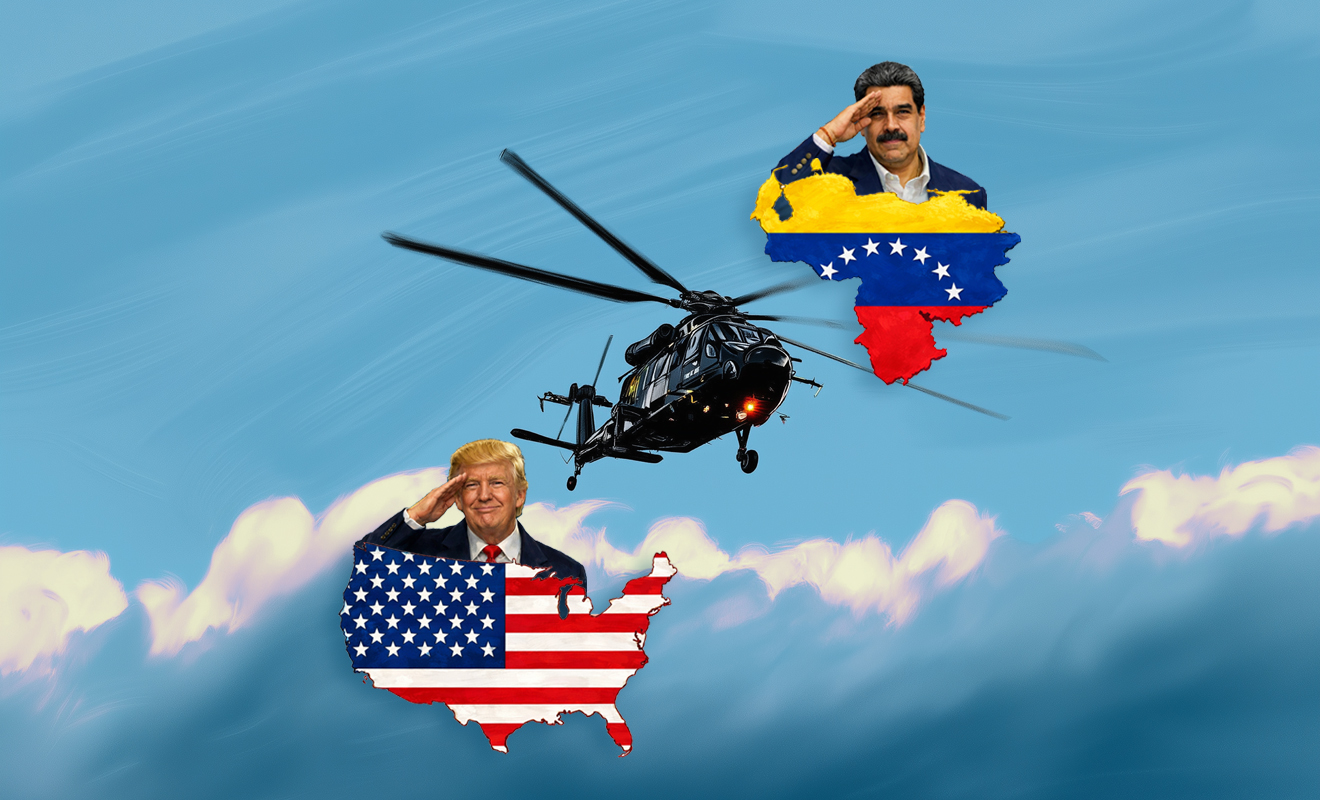
Nicolás Maduro’s name dominated the headlines overnight, yet understanding of the moment lagged far behind the shock of the event itself. In a world conditioned by snap judgements and relentless news cycles, few paused to reflect on how long the confrontation between Washington and Caracas had been in the making — or what its latest escalation might come to represent. As international law is invoked, the world drifts once more into that murky space where old grudges, geopolitical interests, and contested interpretations collide, raising a question that hangs over us all: where is the world headed?
Rules in Question
The US military operation in Venezuela, in which President Nicolás Maduro was arrested and spirited out of the country, was presented as the enforcement of justice — yet unfolded more like a demonstration of raw power. The United States justified its action by citing charges of narcotrafficking and by reiterating its long-standing position that Maduro was never a legitimate president. For Caracas — and for a substantial part of the international community — the operation marked yet another moment in which sovereignty was treated as expendable and diplomacy as an inconvenience.
Reactions were immediate, though sharply divided. America’s strategic rivals condemned the arrest outright, warning that such actions could not be normalised. Allies responded with more cautious disapproval, acutely aware that defending shared legal norms often places alliances themselves under strain.
China denounced the operation as hegemonic and a violation of international law, demanding Maduro’s release and accusing Washington of ‘bullying’ driven by its appetite for Venezuelan oil. It was a reminder that norms look very different depending on who enforces them — and are easily overlooked when it suits one’s own interests. Russia dismissed Trump’s 20-point peace plan for ending the war in Ukraine, and dispatched a submarine and other naval assets to shadow an oil tanker off the Venezuelan coast, turning energy logistics into a theatre of military manoeuvre. North Korea expressed unconditional support for Russia’s position while conducting yet another ballistic missile test. In Latin America, Argentina’s President Javier Milei openly welcomed the American action, while Colombia’s President Gustavo Petro warned that escalating US threats risked pushing the region towards armed confrontation, declaring that such pressure could not go unanswered.
As in some previous crises, the European Union found itself in an awkward position — politically and security-wise dependent on the United States, yet legally bound to principles that the operation appeared to undermine, the EU struggled to respond with coherence. Germany’s call for Washington to explain the legal basis for its actions amounted to a tacit admission of Europe’s limited leverage. The Union remains tasked with defending rules it lacks the means to enforce, while maintaining allegiance to the very power most capable of violating them.
With US President Trump insisting that his own morality is the only constraint on his authority as commander in chief — declaring that he ‘does not need international law’ to guide his actions — Europe’s balancing act is becoming ever harder to maintain.
Such rhetoric has been matched by a flurry of threats that stretch well beyond Venezuela: warnings to the governments of Mexico, Cuba and Colombia that their countries ‘could be next’, and pointed ultimatums to Venezuela’s acting president that failure to ‘do what’s right’ would exact ‘a very big price’.
Most strikingly, Donald Trump has revived talk of acquiring Greenland, citing ‘national security reasons’ and asserting that the United States needs the island — a Danish territory — for its national defence posture. Copenhagen has flatly rejected any notion of annexation, with Denmark’s prime minister insisting that the United States has ‘no right to annex’ the territory and that such pressure from an ally would jeopardise not just bilateral ties but the unity of NATO itself.
All of this unfolds against a backdrop of a world in which international peace is already severely fractured — the war in Ukraine, the conflict in the Middle East, and the clash between Thailand and Cambodia — while Venezuela’s renewed strategic importance stems less from its domestic politics than from its role in an intensifying global contest over energy, particularly oil, at a moment when resources increasingly dictate diplomatic priorities.
Decades in the Making
If the confrontation between the United States and Venezuela appears sudden, history tells a longer story. For much of the twentieth century, Venezuela was one of America’s key energy partners in Latin America. That relationship changed fundamentally with Hugo Chávez’s election in 1999. His programme of nationalisation and redistribution challenged not only US economic interests but the ideological foundations of American influence in the region. By openly opposing what he described as US imperialism, Chávez turned Venezuela into a rallying point for regional resistance and secured political backing through alliances such as ALBA.
Under Maduro, those policies persisted, as did close ties with China, Russia and Iran. Washington responded with escalating sanctions and diplomatic isolation, framing its strategy in terms of democracy, human rights and criminal accountability. Whether accepted or contested, this narrative provided the moral and political scaffolding for sustained pressure on Caracas.
However the dispute is framed, oil sits at its centre. Venezuela holds the world’s largest proven oil reserves — an estimated 303 billion barrels, more than either Saudi Arabia or Iran — yet production has collapsed under the combined weight of sanctions, corruption and chronic underinvestment. This imbalance — extraordinary wealth beneath the ground and profound weakness above it — has shaped relations between Caracas and Washington for decades. The conflict has never been solely about democratic standards; it has always been about resources, leverage and control.
Norms and Reality
Before 1648, war between states was routine. The Peace of Westphalia marked the birth of modern international law, establishing the principle of sovereignty: the right of a state to make decisions within its own borders, free from external interference or coercion. Later came The Hague and Geneva Conventions sought to impose limits even on warfare, gradually constructing a legal architecture shaped by experience, conflict and compromise.
To lawyers and diplomats, international law is simply the framework of rules and norms that governs how states — and other international actors — deal with one another. International law is often dismissed as aspirational, honoured selectively and ignored when inconvenient. Yet without it, global politics would resemble something closer to chaos.
There is no supranational authority capable of compelling great powers to comply. Instead, the system relies on mutual interest, reputation and political pressure. Law does not prevent war, but it can restrain its excesses and preserve the possibility of resolution.
The 2025 Global Peace Index shows that peace today is at its lowest level since records began, reaching the worst outcomes by many measures since the end of the Second World War. The average level of peace declined again in 2025, continuing a trend of deterioration that has persisted for thirteen consecutive years. Armed conflicts have multiplied, deaths have risen, and peaceful settlements have become rarer than at any point in the past half-century. Meanwhile, the economic cost of conflict has soared to an extraordinary $19.97 trillion — nearly 12% of global GDP.
Rules, Until They Aren’t
The arrest of Nicolás Maduro lays bare what international law often conceals: rules are observed when they serve power and discarded when they do not. Great powers may differ ideologically, but their behaviour converges when interests are at stake. Norms are tested, bent and, when necessary, ignored — usually without consequence.
What remains uncertain is whether international law itself is eroding, or whether the global order simply determines how far that law can reach. The more unsettling question is this: is today’s peace the product of law, or something law cannot truly guarantee?
- Share
-

-

-

-

-

-

 331
331
 264
264
 254
254