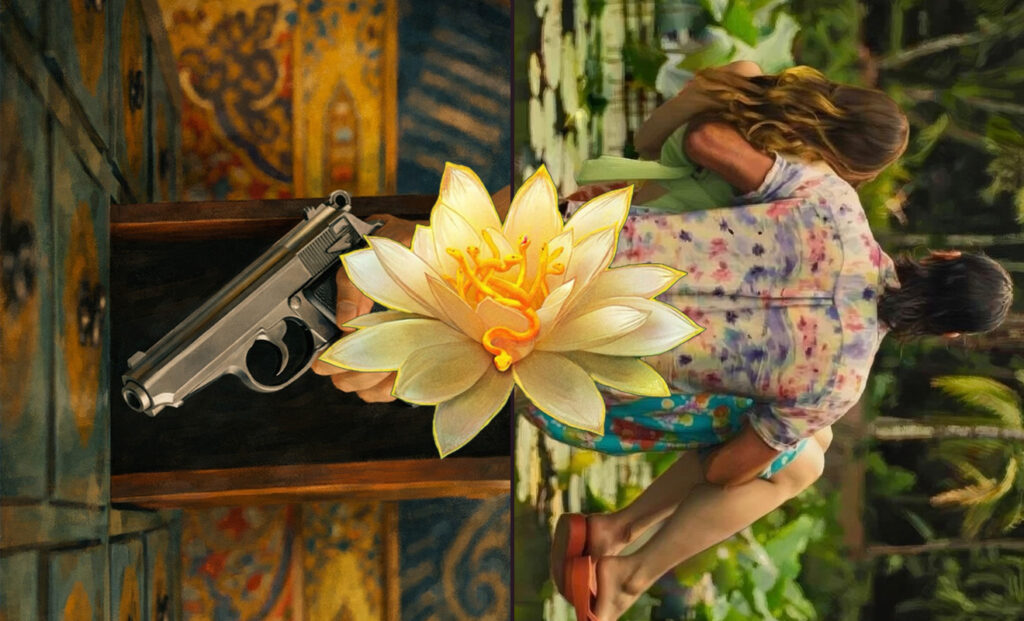
Post-Boy: Serbia’s Midlife Evolution
An intimate portrait of middle-aged Serbian men discovering themselves, love, and renewed masculinity
 Jan Novak
  06/03/2026
  11 views
In Serbia, everything is a fractured duality: East versus West, the waking world versus the fever dream, the husband versus the lover. And right in that liminal space — somewhere past the sell-by date of youth, yet miles off the map of ‘old’ — exists a very specific breed: the middle-aged man.
It’s that stage when the wine has finally realised it’s wine, yet still carries a faint, ghost-like memory of the fruit. So, let’s be clear: this isn’t a redemption arc. It’s not about some woman who ‘fixed’ him — bless her heart. It’s not even a piece about marriage. It’s about a transformation that seems to happen overnight, as if someone flicked a switch and this entire species suddenly evolved — or, at the very least, started wearing better shoes, and meaning it.
The Present Tense
Out here, on this patch of earth once politely written off as a ‘no man’s land,’ we’ve long accepted the trope: the fifty-year-old man is a guy who’s misplaced both his slippers and his emotions — and he’s in absolutely no rush to track them down. He’s spent a lifetime as a character in a grand narrative he didn’t write, but never dared to question. He was taught that love isn’t something you confess; it’s something you patch up — a broken shutter, a leaking oil sump, a stack of wood that needs splitting.
Back in the day, these were the guys who’d drag you for a pint and sulk if you couldn’t make it. The ones who wouldn’t touch a razor if their life — or their relationship — depended on it. And now? Now they’re deep-diving into podcasts and syncing their lives to running apps on their smartwatches. They’re working out now, not to sculpt an ego for the beach, but because their knees are starting to have opinions. In the gym, it’s not about the mirror anymore; it’s about stretching out that persistent, middle-aged ache. They run — not to outpace life, but to catch up with it. They don’t say ‘I love you’ out loud, but they’ll grab that specific yoghurt you like on the way home.
They’ve stopped mythologising the future, but they’ve mastered the art of making the present, well, liveable. They’ve finally binned the ‘boy’ act — and, ironically, that’s exactly why they’ve never felt more like men.
The man is no longer a mere biological category. He’s morphed into an archetype, a myth, a tragic hero — and, against all odds, an unlikely lover. All of it, rolled into one messy, contradictory package.
Exhausted by Performance
The Serbian man of a certain vintage is the new Beast. And not because he’s stuck in some fairy-tale delusion, but because he’s finally decided to inhabit the version of himself he either ditched along the way or never quite got the nerve to be. Midlife, then, isn’t a crisis; it’s a homecoming. A return not to the shallow waters of youth, but to the harder, more honest terrain of self.
Because what hits you after the chaos of your thirties and forties — once the kids have flown the nest, the mortgage has finally stopped holding you hostage, and the silence isn’t a terrifying void, but a long-overdue exhale — that’s when the real love shows up. Not the cinematic, scripted kind, but the raw, Balkan version: a space where neither needs to play the alpha or carry the world alone. In those quiet hours, both exhausted by the versions of themselves they failed to perform, they finally stop running. They choose to be together. Not out of necessity, but out of recognition.
Exit Strategy
Walk the streets — from the big city sprawl to the tight-knit neighbourhoods where everyone still knows exactly whose doorbell just rang — and you’ll spot the forty-something man. He paces the pavement like he’s in on a secret the rest of us are still struggling to decode. And maybe, just maybe, he is.
They’ve dropped the desperate need to prove themselves — unaware, it seems, that they’ve never looked quite this sharp. There’s a certain gravity to that confidence; a quiet, magnetic weight that simply cannot be taught.
Naturally, they aren’t all cut from the same cloth. There’s still the lingering breed who think it’s ‘alpha’ to hold the reins, who expect a woman to play the mute audience while they hold court on the proper way to boil beans, and who perpetually sigh that things ‘aren’t like they used to be.’ But they’re a dying breed. Or perhaps we’ve just stopped noticing them. They’re becoming background noise in a world that’s moved on.
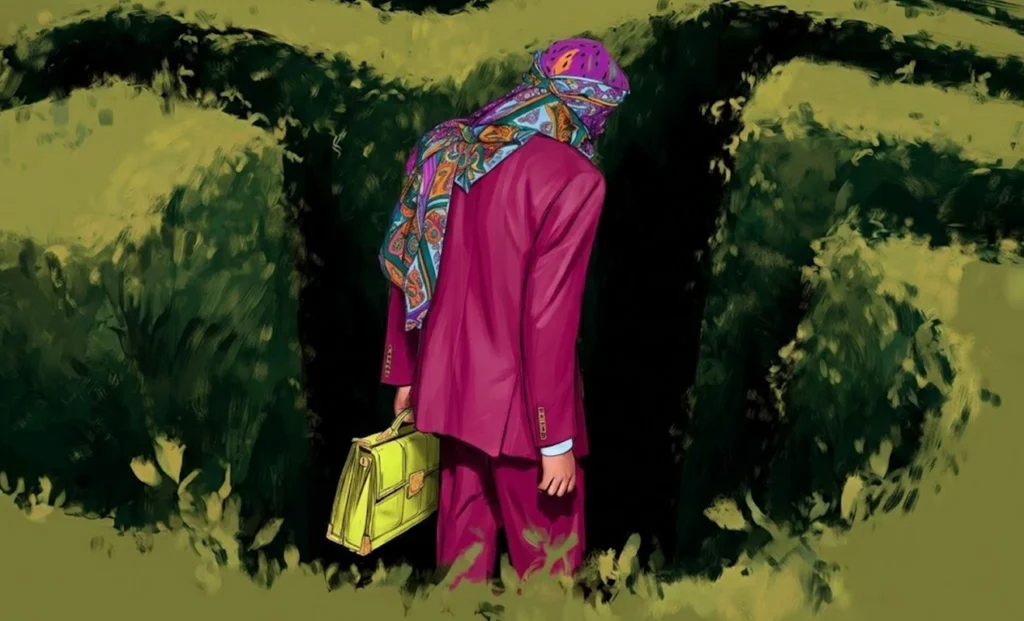
Then, there’s the new guard. Men who are intense, yet never invasive. Who see a woman as a full human being, not a domestic function. They aren’t ashamed to show their cracks — they wear them as part of the architecture, remaining steady and strong, even when they’re unravelling.
There’s a kind of new-wave eroticism to this life stage. It isn’t found in the frantic, skin-deep rush or the tactical avoidance of intimacy. It’s found in a look across the dinner table that hangs in the air, weighted with everything that’s gone unsaid. It’s a man who understands that if you’ve been stone-silent all day, you don’t need his ‘fix’ or his advice — you just need someone to hold the silence with you.
Of course, there’s always the holdout: the man who wakes up every morning determined to keep change at arm’s length. He’s the one baffled by why his partner has stopped pretending she isn’t exhausted, and he’s the one who throws a tantrum when life refuses to cast him as the lead. But even he is a fixture in this landscape — a necessary, if slightly tragic, part of the scenery.
And his wife — that eternal, self-appointed custodian of the peace, the one who’s learned to shoulder everything from grocery bags to the far heavier weight of unvoiced thoughts — she watches this evolution through a lens of healthy, seasoned scepticism. Because she, too, is entering her second act. And in this chapter, she’s no longer just looking for the embers of warmth; she’s looking for the light.
Everything and Nothing
In a culture where codes often weigh heavier than feelings, men have long acted as the grim guardians of ‘how things are done.’ But there’s a shift: they’re starting to read, and — dare I say — they actually want to discuss it. They’re tidying up after themselves, and not just for show. They’re travelling, not to run from the grind, but to bring something tangible back to the table. Conversations have evolved, too: gone are the days of the repetitive post-match autopsy. Now, it’s all about therapy, that dream that shook them awake at 4 a.m., and the quiet admission that time is a finite resource. They’re acutely aware of the clock, and perhaps that’s why they’ve finally decided to stop wasting the hours.
Increasingly, they’re choosing to anchor themselves to people — guys or women — who aren’t looking for a saviour, but a peer. People who have weathered their own storms and now understand the fundamental gap between cheap attention and genuine desire. They’re finally choosing partners who know exactly what they need, and, more pointedly, who they actually want.
And perhaps that’s all midlife asks of a man. Not to stay young, or perfect, or bulletproof. Just to be present. In his own skin. With himself. And with those he chooses to love. All without the need to shout about it from the rooftops.
Because now, when he looks in the mirror and meets the gaze of a man he actually recognises — an improved, more coherent version of the prototype — he knows he’s finally clocked the lesson. And perhaps, for the very first time, he even knows what that lesson is.
And maybe, only now, does he actually know how to love. And make no mistake: that’s the most rugged, honest version of manhood there is.
And just so we’re crystal: this isn’t a guarantee. It’s not a weather report, a prediction, or a fortune cookie prediction you find in a cheap takeaway. Just because you think you recognise someone in these lines doesn’t mean the reality matches the portrait. Maybe he is that man. Maybe he’s a work in progress. Or maybe he’ll never get there at all.
SO, HERE’S THE THING: I’m 29. No midlife crisis here. Consider this less a confession and more a collage — assembled from scraps of conversations, silent observations, and the men currently within arm’s reach. If it reads like nonsense, blame the sample size: it’s just field research gone rogue.
- Share
-

-

-

-

-

-

 316
316
 237
237
 221
221